
Short answers : Solutions of Questions on Page Number : 79
NCERT Solutions for Class 11 Accountancy Financial Accounting Part 1 Chapter 3 Recording of Transactions – I
Q1 : State the three fundamental steps in the accounting process.
Answer :
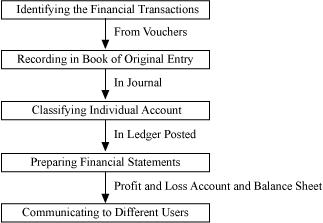
The fundamental steps in the accounting process are diagrammatically presented below.
Q2 :Why is the evidence provided by source documents important to accounting?
Answer :
The evidence provided by the source document is important in the following manners:
- It provides evidence that a transaction has actually occurred.
- It provides important and relevant information about date, amount, parties involved and other details of a particular transaction.
- It acts as a proof in the court of law.
- It helps in verifying transactions during the auditing process.
Q3 : Should a transaction be first recorded in a journal or ledger? Why?
Answer :
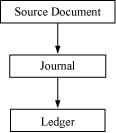
A transaction should be recorded first in a journal because journal provides complete details of a transaction in one entry. Further, a journal forms the basis for posting the transactions into their respective accounts into ledger. Transactions are recorded in journal in chronological order, i.e. in the order of occurrence with the help of source documents. Journal is also known as ‘book of original entry’, because with the help of source document, transactions are originally recorded in books. The process of recording the transactions in journal and then in ledger is presented in the below given flow chart.
Q4 : Are debits or credits listed first in journal entries? Are debits or credits indented?
Answer :
As per the rule of double entry system, there are two columns of ‘Amount’ in the journal format namely ‘Debit Amount’ and ‘Credit Amount’. The way of recording in a journal is quite different from normal recording. Journal entry is recorded in journal format in which the ‘Debit Amount’ column is listed before the ‘Credit Amount’ column.
Credits are indented. Indentation is leaving a space before writing any word. Journal entry has its own jargon. While journalising, in the ‘Particulars’ column of journal format, debited account is written first and credited account is in the next line leaving some space, which is indentation.
Q5 : Why are some accounting systems called double accounting systems?
Answer :
Some accounting systems are called double accounting systems because under this system there are two aspects of every transaction, i.e., every transaction has dual effect. Every transaction affects two accounts simultaneously, that is represented by debiting one account and crediting the other account. It is based on the fact that if there is receiver, there should be a giver.
Q6 : Give a specimen of an account.
Answer :
| _________Account | |||||||
| Dr. | Cr. | ||||||
| Date | Particulars | J.F. | Amount Rs | Date | Particulars | J.F. | Amount Rs |
Q7 : Why are the rules of debit and credit same for both liability and capital?
Answer :
Every business acquires funds from internal as well as from external sources. According to the business entity concept, the amount borrowed from the external sources together with the internal sources like, capital invested by the proprietor, is termed as liability to the business. Business entity concept treats business and business owner separately. Capital of the owner is treated as liability to the business because the business has to repay the amount of capital to the owner, in case of closure of the business. As liability incurred is credited, in the same way, fresh capital introduced and net profit increases the owner’s capital, and so, capital is credited. On the other hand, if liability is paid, it reduces liability, and so, it is debited. Similarly, drawings from capital and net loss reduce the capital, and so, capital is debited. Thus the rules of debit and credit are same for both liability and capital.
Q8 : What is the purpose of posting J.F numbers that are entered in the journal at the time entries are posted to the accounts?Answer :
J.F. number is the number that is entered in the ledger at the time of posting entries into their respective accounts. It helps in determining whether all transactions are properly posted in their accounts. It is recorded at the time of posting and not at the time of recording the transactions.
The purpose of entering J.F. number in the ledger is because of the below given benefits.
- J.F. number helps in locating the entries of accounts in the journal book. In other words, J.F number helps to locate the position of the related journal entry and subsidiary book in the journal book.
- J.F. number in accounts ensures that recording in the books of original entry has been posted or not.
Q9 : What entry (debit or credit) would you make to: (a) increase revenue (b) decrease in expense, (c) record drawings (d) record the fresh capital introduced by the owner.
Answer :
- Increase in revenue
Increase in revenue is credited as it increases the capital. Capital has credit balance and if capital increases, then it is credited.
- Decrease in expense
Decrease in expense is credited as all expenses have debit balance. If expense decreases, then it is credited.
- Record drawings
Capital has credit balance; if the capital increases, then it is credited. If capital decreases, then it is debited. Drawings are debited as they decrease the capital.
- Record of fresh capital introduced by the owner- credit
Capital has credit balance, if capital increases, then it is credited. The introduction of fresh capital increases the balance of capital, and so, it is credited.
Q10 : If a transaction has the effect of decreasing an asset, is the decrease recorded as a debit or as a credit? If the transaction has the effect of decreasing a liability, is the decrease recorded as a debit or as a credit?
Answer :
If a transaction has a decreasing effect on an asset, then this decrease is recorded as credit. This is because, as all assets have debit balance and if assets decrease, then it is credited. For example, sale of furniture results in decrease in furniture (asset); so, the sale of furniture will be credited.
If a transaction has a decreasing effect on a liability, then this decrease is recorded as debit. This is because all liabilities have credit balance. If the liability increases, then it is credited and if the liability decreases, then it is debited. For example, payment to the creditors results in a decrease in the creditors (liability); so, the creditors account will be debited.
Numerical questions : Solutions of Questions on Page Number : 80
Q1 : Prepare accounting equation on the basis of the following:
(a) Harsha started business with cash Rs 2,00,000
(b) Purchased goods from Naman for cash Rs 40,000
(c) Sold goods to Bhanu costing Rs 10,000/- Rs 12,000
(d) Bought furniture on credit Rs 7,000
Answer:
|
S.No. |
Explanation |
Assets |
= |
Liabilities |
+ |
Capital |
||||||
|
Cash |
+ |
Stock |
+ |
Debtors |
+ |
Furniture |
Creditors |
|||||
|
(a) |
Increase in cash |
2,00,000 |
= |
|
||||||||
|
Increase in capital |
|
|
|
|
|
|
|
|
|
|
2,00,000 |
|
|
|
2,00,000 |
= |
NIL |
+ |
2,00,000 |
|||||||
|
(b) |
Increase in stock |
40,000 |
|
|||||||||
|
Decrease in cash |
(40,000) |
|
|
|
|
|
|
|
|
|
||
|
|
1,60,000 |
+ |
40,000 |
= |
NIL |
+ |
2,00,000 |
|||||
|
(c) |
Increase in debtors |
12,000 |
|
|||||||||
|
Decrease in stock |
(10,000) |
|
||||||||||
|
Profit |
|
|
|
|
|
|
|
|
|
2,000 |
||
|
|
1,60,000 |
+ |
30,000 |
+ |
12,000 |
= |
NIL |
2,02,000 |
||||
|
(d) |
Increase in furniture |
7,000 |
|
|||||||||
|
|
Increase in creditors |
|
|
|
|
|
|
|
|
7,000 |
|
|
|
|
|
1,60,000 |
+ |
30,000 |
+ |
12,000 |
+ |
7,000 |
= |
7,000 |
+ |
2,02,000 |
Q2 :Prepare accounting equation from the following:
| Rs | ||
| (a) | Kunal started business with cash | 2,50,000 |
| (b) | He purchased furniture for cash | 35,000
|
| (c) | He paid commission | 2,000 |
| (d) | He purchases goods on credit | 40,000 |
| (e) | He sold goods (costing Rs 20,000) for cash | 26,000 |
Answer :
| S.No. | Explanation | Assets | Liabilities | + | Capital | |||||||
| Cash | + | Furniture | + | Stock | = | Creditors | ||||||
| (a) | Increase in cash | 2,50,000 | ||||||||||
| Increase in capital | 2,50,000 | |||||||||||
| 2,50,000 | = | NIL | + | 2,50,000 | ||||||||
| (b) | Increase in furniture | 35,000 | He paid commission | |||||||||
| Decrease in cash | (35,000) | |||||||||||
| 2,15,000 | + | 35,000 | = | NIL | + | 2,50,000 | ||||||
| (c) | Decrease in capital (Expense) | (2,000) | ||||||||||
| Decrease in cash | (2,000) | |||||||||||
| 2,13,000 | + | 35,000 | = | NIL | + | 2,48,000 | ||||||
| (d) | Increase in stock | 40,000 | ||||||||||
| Increase in creditors | 40,000 | |||||||||||
| 2,13,000 | + | 35,000 | + | 40,000 | = | 40,000 | + | 2,48,000 | ||||
| (e) | Increase in cash | 26,000 | ||||||||||
Q3 : Mohit has the following transactions, prepare accounting equation:
| Rs | ||
| (a) | Business started with cash | 1,75,000 |
| (b) | Purchased goods from Rohit | 50,000 |
| (c) | Sales goods on credit to Manish (Costing Rs 17,500) | 20,000 |
| (d) | Purchased furniture for office use | 10,000 |
| (e) | Cash paid to Rohit in full settlement | 48,500 |
| (f) | Cash received from Manish | 20,000 |
| (g) | Rent paid | 1,000 |
| (h) | Cash withdrew for personal use | 3,000 |
Answer :
| S.No. | Explanation | Assets | Liabilities | + | Capital | |||||||
| Cash | + | Stock | + | Debtors | Furniture | = | Creditors | |||||
| (a) | Increase in cash | 1,75,000 | ||||||||||
| Increase in capital | 1,75,000 | |||||||||||
| 1,75,000 | = | NIL | + | 1,75,000 | ||||||||
| (b) | Increase in stock | 50,000 | ||||||||||
| Increase in creditors (Rohit) | = | 50,000 | + | 1,75,000 | ||||||||
| 1,75,000 | + | 50,000 | = | 50,000 | + | 1,75,000 | ||||||
| (c) | Increase in debtors (Manish) | 20,000 | ||||||||||
| Decrease in stock | (17,500) | |||||||||||
| Increase in capital (Profit) | 2,500 | |||||||||||
| 1,75,000 | + | 32,500 | + | 20,000 | = | 50,000 | + | 1,77,500 | ||||
| (d) | Increase in furniture | 10,000 | ||||||||||
| Decrease in cash | (10,000) | |||||||||||
Q4 : Rohit has the following transactions:
| Rs | ||
| (a) | Commenced business with cash | 1,50,000 |
| (b) | Purchased machinery on credit | 40,000 |
| (c) | Purchased goods for cash | 20,000 |
| (d) | Purchased car for personal use | 80,000 |
| (e) | Paid to creditors in full settlement | 38,000 |
| (f) | Sold goods for cash costing Rs 5,000 | 4,500 |
| (g) | Paid rent | 1,000 |
| (h) | Commission received in advance | 2,000 |
Prepare the Accounting Equation to show the effect of the above transactions on the assets, liabilities and capital.
Answer :
| S.No. | Explanation | Assets | Liabilities | + | Capital | |||||||||
| Cash | + | Machinery | + | Stock | = | Creditors | + | Unaccrued Income | ||||||
| (a) | Increase in cash | 1,50,000 | ||||||||||||
| Increase in capital | 1,50,000 | |||||||||||||
| 1,50,000 | = | NIL | + | 1,50,000 | ||||||||||
| (b) | Increase in machinery | 40,000 | ||||||||||||
| Increase in creditors | = | 40,000 | ||||||||||||
| 1,50,000 | + | 40,000 | = | 40,000 | + | 1,50,000 | ||||||||
| (c) | Increase in stock | 20,000 | ||||||||||||
| Decrease in cash | (20,000) | |||||||||||||
| 1,30,000 | + | 40,000 | + | 20,000 | = | 40,000 | + | 1,50,000 | ||||||
| (d) | Decrease in cash | (80,000) | ||||||||||||
| Decrease in capital (Drawings) | (80,000) | |||||||||||||
| 50,000 | + | 40,000 | + | 20,000 | = | 40,000 | + | 70,000 | ||||||
| (e) | Decrease in creditors | (40,000) | ||||||||||||
| Decrease in cash | (38,000) | |||||||||||||
| Increase in capital
(Discount received) |
||||||||||||||
Q5 : Use accounting equation to show the effect of the following transactions of M/s Royal Traders:
| Rs | ||
| (a) | Started business with cash | 1,20,000 |
| (b) | Purchased goods for cash | 10,000 |
| (c) | Rent received | 5,000 |
| (d) | Salary outstanding | 2,000 |
| (e) | Prepaid Insurance | 1,000 |
| (f) | Received interest | 700 |
| (g) | Sold goods for cash (costing Rs 5,000) | 7,000 |
| (h) | Goods destroyed by fire | 500 |
Answer:
| S.No. | Explanation | Assets | = | Liabilities | + | Capital | ||||
| Cash | + | Stock | + | Prepaid Expenses | Outstanding Expenses | |||||
| (a) | Increase in cash | 1,20,000 | ||||||||
| Increase in capital | 1,20,000 | |||||||||
| 1,20,000 | = | NIL | + | 1,20,000 | ||||||
| (b) | Increase in stock | 10,000 | ||||||||
| Increase in cash | (10,000) | = | ||||||||
| 1,10,000 | + | 10,000 | = | NIL | + | 1,20,000 | ||||
| (c) | Increase in cash | 5,000 | ||||||||
| Increase in capital (Profit) | 5,000 | |||||||||
| 1,15,000 | + | 10,000 | = | NIL | + | 1,25,000 | ||||
| (d) | Increase in outstanding expenses | = | 2,000 | |||||||
| Decrease in capital (Expense) | (2,000) | |||||||||
| 1,15,000 | + | 10,000 | = | 2,000 | + | 1,23,000 | ||||
| (e) | Increase in prepaid expenses | 1,000 | ||||||||
| Decrease in cash | (1,000) | |||||||||
| 1,14,000 | + | 10,000 | + | 1,000 | = | 2,000 | + | 1,23,000 | ||
| (f) | Increase in cash | 700 | ||||||||
| Increase in capital (Profit) | 700 | |||||||||
| 1,14,700 | + | 10,000 | + | 1,000 | = | 2,000 | + | 1,23,700 | ||
| (g) | Increase in cash | 7,000 | ||||||||
| Decrease in stock | (5,000) | |||||||||
| Increase in capital (Profit) | 2,000 | |||||||||
| 1,21,700 | + | 5,000 | + | 1,000 | = | 2,000 | + | 1,25,700 | ||
| (h) | Decrease in stock | (500) | ||||||||
Q6 : Show the accounting equation on the basis of the following transaction:
| (a) | Udit started business with: | Rs | |
| (i) | Cash | 5,00,000 | |
| (ii) | Goods | 1,00,000 | |
| (b) | Purchased building for cash | 2,00,000 | |
| (c) | Purchased goods from Himani | 50,000 | |
| (d) | Sold goods to Ashu (Cost Rs 25,000) | 36,000 | |
| (e) | Paid insurance premium | 3,000 | |
| (f) | Rent outstanding | 5,000 | |
| (g) | Depreciation on building | 8,000 | |
| (h) | Cash withdrawn for personal use | 20,000 | |
| (i) | Rent received in advance | 5,000 | |
| (j) | Cash paid to Himani on account | 20,000 | |
| (k) | Cash received from Ashu | 30,000 | |
Answer:
| S.No. | Explanation | Assets | = | Liabilities | + | Capital | ||||||||||
| Cash | + | Stock | + | Building | + | Debtors | Creditors | + | Outstanding Expenses | + | UnaccruedIncome | |||||
| (a) | Increase in cash | 5,00,000 | ||||||||||||||
| Increase in stock | 1,00,000 | |||||||||||||||
| Increase in capital | 6,00,000 | |||||||||||||||
| 5,00,000 | + | 1,00,000 | = | NIL | + | 6,00,000 | ||||||||||
| (b) | Increase in building | 2,00,000 | ||||||||||||||
| Decrease in cash | (2,00,000) |
= |
||||||||||||||
| 3,00,000 | + | 1,00,000 | + | 2,00,000 | = | NIL | + | 6,00,000 | ||||||||
| (c) | Increase in stock | 50,000 | ||||||||||||||
| Increase in creditors | = | 50,000 | ||||||||||||||
| 3,00,000 | + | 1,50,000 | + | 2,00,000 | = | 50,000 | ||||||||||
Q7 : Show the effect of the following transactions on Assets, Liabilities and Capital through accounting equation:
| Rs | ||
| (a) | Started business with cash | 1,20,000 |
| (b) | Rent received | 10,000 |
| (c) | Invested in shares | 50,000 |
| (d) | Received dividend | 5,000 |
| (e) | Purchase goods on credit from Ragani | 35,000 |
| (f) | Paid cash for house hold Expenses | 7,000 |
| (g) | Sold goods for cash (costing Rs 10,000) | 14,000 |
| (h)
(i) |
Cash paid to Ragani
Deposited into bank |
35,000
20,000 |
Answer:
| S.No. | Explanation | Assets | = | Liabilities | + | Capital | ||||||
| Cash | + | Stock | + | Investment | + | Bank | Creditors | |||||
| (a) | Increase in cash | 1,20,000 | ||||||||||
| Increase in capital | 1,20,000 | |||||||||||
| 1,20,000 | + | = | NIL | + | 1,20,000 | |||||||
| (b) | Increase in cash | 10,000 | ||||||||||
| Increase in capital (Income) | = | 10,000 | ||||||||||
| 1,30,000 | = | NIL | + | 1,30,000 | ||||||||
| (c) | Decrease in investment | 50,000 | ||||||||||
| Decrease in cash | (50,000) | = | ||||||||||
| 80,000 | + | 50,000 | = | NIL | + | 1,30,000 | ||||||
| (d) | Increase in cash | 5,000 | ||||||||||
| Increase in capital (Income) | 5,000 | |||||||||||
| 85,000 | + | 50,000 | = | NIL | + | 1,35,000 | ||||||
| (e) | Increase in stock | 35,000 | ||||||||||
| Increase in creditor (Ragani) | 35,000 | |||||||||||
| 85,000 | + | 35,000 | + | 50,000 | = | 35,000 | + | 1,35,000 | ||||
| (f) | Decrease in capital | (7,000) | ||||||||||
| Decrease in cash | (7,000) | |||||||||||
| 78,000 | + | 35,000 | + | 50,000 | = | 35,000 | + | 1,28,000 | ||||
Q8 : Show the effect of following transaction on the accounting equation:
| Rs | ||
| (a) | Manoj started business with | |
| (i) Cash | 2,30,000 | |
| (ii) Goods | 1,00,000 | |
| (iii) Building | 2,00,000 | |
| (b) | He purchased goods for cash | 50,000 |
| (c) | He sold goods(costing Rs 20,000) | 35,000 |
| (d) | He purchased goods from Rahul | 55,000 |
| (e) | He sold goods to Varun (Costing Rs 52,000) | 60,000 |
| (f) | He paid cash to Rahul in full settlement | 53,000 |
| (g) | Salary paid by him | 20,000 |
| (h) | Received cash from Varun in full settlement | 59,000 |
| (i) | Rent outstanding | 3,000 |
| (j) | Prepaid Insurance | 2,000 |
| (k) | Commission received by him | 13,000 |
| (l) | Amount withdrawn by him for personal use | 20,000 |
| (m) | Depreciation charge on building | 10,000 |
| (n) | Fresh capital invested | 50,000 |
| (o) | Purchased goods from Rakhi | 6,000 |
Answer:
| S.No. | Explanation | Assets | = | Liabilities | + | Capital | ||||||||||
| Cash | + | Stock | + | Building | + | Debtors | + | Prepaid Expenses | Creditors | + | Outstanding Expenses | |||||
| (a) | Increase in cash, stock and building | 2,30,000 | + | 1,00,000 | + | 2,00,000 | ||||||||||
| Increase in capital | 5,30,000 | |||||||||||||||
| 2,30,000 | + | 1,00,000 | + | 2,00,000 | = | + | 5,30,000 | |||||||||
| (b) | Increase in stock | 50,000 | ||||||||||||||
| Decrease in cash | (50,000) | |||||||||||||||
| 1,80,000 | + | 1,50,000 | + | 2,00,000 | = | + | 5,30,000 | |||||||||
| (c) | Increase in cash | 35,000 | ||||||||||||||
| Decrease in stock | (20,000) | |||||||||||||||
| increase in capital (Profit) | 15,000 | |||||||||||||||
| 2,15,000 | + | 1,30,000 | + | 2,00,000 | ||||||||||||
Q9 : Transactions of M/s. Vipin Traders are given below.
Show the effects on Assets, Liabilities and Capital with the help of accounting Equation.
| Rs | ||
| (a) | Business started with cash | 1,25,000 |
| (b) | Purchased goods for cash | 50,000 |
| (c) | Purchase furniture from R.K. Furniture | 10,000 |
| (d) | Sold goods to Parul Traders (costing Rs 7,000 vide bill no. 5674) | 9,000 |
| (e) | Paid cartage | 100 |
| (f) | Cash Paid to R.K. furniture in full settlement | 9,700 |
| (g) | Cash sales (costing Rs 10,000) | 12,000 |
| (h) | Rent received | 4,000 |
| (i) | Cash withdrew for personal use | 3,000 |
Answer :
| S.No. | Explanation | Assets | = | Liabilities | + | Capital | ||||||
| Cash | + | Stock | + | Furniture | + | Debtors | Creditors | |||||
| (a) | Increase in cash | 1,25,000 | ||||||||||
| Increase in capital | 1,25,000 | |||||||||||
| 1,25,000 | + | = | NIL | + | 1,25,000 | |||||||
| (b) | Increase in stock | 50,000 | ||||||||||
| Decrease in cash | (50,000) | = | ||||||||||
| 75,000 | + | 50,000 | = | NIL | + | 1,25,000 | ||||||
| (c) | Increase in furniture | 10,000 | = | |||||||||
| Increase in creditors | = | 10,000 | ||||||||||
| 75,000 | + | 50,000 | + | 10,000 | = | 10,000 | + | 1,25,000 | ||||
| (d) | Increase in debtors | 9,000 | ||||||||||
| Decrease in stock | (7,000) | |||||||||||
| Increase in capital (Profit) | 2,000 | |||||||||||
| 75,000 | + | 43,000 | + | 10,000 | + | 9,000 | = | 10,000 | + | 1,27,000 | ||
| (e) | Decrease in capital (Cartage Expenses) | (100) | ||||||||||
| Decrease in cash | (100) | |||||||||||
| 74,900 | + | 43,000 | + | 10,000 | + | 9,000 | = | 10,000 | + | 1,26,900 | ||
| (f) | Decrease in creditors | = | (10,000) | |||||||||
| Decrease in cash | (9,700) | |||||||||||
| Increase in capital (Discount-received) | 300 | |||||||||||
Q10 : Bobby opened a consulting firm and completed these transactions during November, 2005:
| (a) | Invested Rs 4,00,000 cash and office equipment with Rs 1,50,000 in a business called Bobbie Consulting. |
| (b) | Purchased land and a small office building. The land was worth Rs 1,50,000 and the building worth Rs 3,50,000. The purchase price was paid with Rs 2,00,000 cash and a long term note payable for Rs 8,00,000. |
| (c) | Purchased office supplies on credit for Rs 12,000. |
| (d) | Bobbie transferred title of motor car to the business. The motor car was worth Rs 90,000. |
| (e) | Purchased for Rs 30,000 additional office equipment on credit. |
| (f) | Paid Rs 75,00 salary to the office manager. |
| (g) | Provided services to a client and collected Rs 30,000 |
| (h) | Paid Rs 4,000 for the month’s utilities. |
| (i) | Paid supplier created in transaction (c). |
| (j) | Purchase new office equipment by paying Rs 93,000 cash and trading in old equipment with a recorded cost of Rs 7,000. |
| (k) | Completed services of a client for Rs 26,000. This amount is to be paid within 30 days. |
| (l) | Received Rs 19,000 payment from the client created in transaction (k). |
| (m) | Bobby withdrew Rs 20,000 from the business. |
Analyse the above stated transactions and open the following T-accounts:
Cash, client, office supplies, motor car, building, land, long term payables, capital, withdrawals, salary, expense and utilities expense.
Answer:
a)
The transaction (a) increases assets by Rs 5,50,000 (cash Rs 4,00,000 and office equipment Rs 1,5,000) it will be debited and on the other hand it will increase the capital by Rs 5,50,000, so it will be credited in capital account.
| Cash Account | Office Equipment Account | Capital Account | ||||||||||||
| Dr. | Cr. | Dr. | Cr | . | Dr. | Cr. | ||||||||
| (a) | Rs 4,00,000 | (a) | Rs 1,50,000 | (a) | Rs 4,00,000 | |||||||||
| (a) | Rs 1,50,000 | |||||||||||||
b)
Purchase of land and small office building are assets. On one hand, the purchase of these items will increase their individual accounts and this will increase the total amount of the assets in the business; so, both the accounts will be debited. On the other hand, payment in cash on the purchase of these assets will decrease the cash balance, so cash account will be credited to the extent of amount paid. After payment for building in cash, the balance of building account will be transferred to creditors for building account. This will increase the amount of the creditors, which in turn will increase the total liabilities of the business. Long term payables are regarded as loan to the business that will increase both cash balance (due to intake of loan) as well as liabilities of the business.
| Land Account | Building Account | |||||||
| Dr. | Cr. | Dr. | Cr. | |||||
| (b) | Rs 1,50,000 | (b) | Rs 3,50,000 | |||||
| Cash Account | Long Term Payable Account | ||||||||
| Dr. | Cr. | Dr. | Cr. | ||||||
| (a) | Rs 4,00,000 | (b) | Rs 1,50,000 | (b) | Rs 8,00,000 | ||||
| (b) | Rs 8,00,000 | (b) | Rs 50,000 | ||||||
Q11 : Journalise the following transactions in the books of Himanshu:
| 2005 | Rs | |
| Dec.01 | Business started with cash | 75,000 |
| Dec.07 | Purchased goods for cash | 10,000 |
| Dec.09 | Sold goods to Swati | 5,000 |
| Dec.12 | Purchased furniture | 3,000 |
| Dec.18 | Cash received from Swati in full settlement | 4,000 |
| Dec.25 | Paid rent | 1,000 |
| Dec.30 | Paid salary | 1,500 |
Answer:
| Books of Himanshu
Journal |
||||||
| Date | Particulars | L.F. | Debit
Amount Rs |
Credit Amount
Rs |
||
| 2005 | ||||||
| Dec.01 | Cash A/c | Dr. | 75,000 | |||
| To Capital A/c | 75,000 | |||||
| (Started business with cash) | ||||||
| Dec.07 | Purchases A/c | Dr. | 10,000 | |||
| To Cash A/c | 10,000 | |||||
| (Goods purchased for cash) | ||||||
| Dec.09 | Swati | Dr. | 5,000 | |||
| To Sales A/c | 5,000 | |||||
| (Goods sold on credit) | ||||||
| Dec.12 | Furniture A/c | Dr. | 3,000 | |||
| To Cash A/c | 3,000 | |||||
| (Furniture purchased for cash) | ||||||
| Dec.18 | Cash A/c | Dr. | 4,000 | |||
| Discount Allowed A/c | Dr. | 1,000 | ||||
| To Swati | 5,000 | |||||
| (Cash received from Swati and discount allowed) | ||||||
| Dec.25 | Rent A/c | Dr. | 1,000 | |||
| To Cash A/c | 1,000 | |||||
| (Rent paid in cash) | ||||||
Q12 : Enter the following Transactions in the Journal of Mudit :
| 2006 | Rs | |
| Jan.01 | Commenced business with cash | 1,75,000 |
| Jan.01 | Building | 1,00,000 |
| Jan.02 | Goods purchased for cash | 75,000 |
| Jan.03 | Sold goods to Ramesh | 30,000 |
| Jan.04 | Paid wages | 500 |
| Jan.06 | Sold goods for cash | 10,000 |
| Jan.10 | Paid for trade expenses | 700 |
| Jan.12 | Cash received from Ramesh | 29,500 |
| Discount allowed | 500 | |
| Jan.14 | Goods purchased for Sudhir | 27,000 |
| Jan.18 | Cartage paid | 1,000 |
| Jan.20 | Drew cash for personal use | 5,000 |
| Jan.22 | Goods use for house hold | 2,000 |
| Jan.25 | Cash paid to Sudhir | 26,700 |
| Discount allowed | 300 |
Answer:
| Books of Mudit
Journal |
|||||||||
| Date | Particulars | L.F. | Debit Amount
Rs |
Credit Amount Rs | |||||
| 2006 | |||||||||
| Jan.01 | Building A/c | Dr. | 1,00,000 | ||||||
| Cash A/c | Dr. | 1,75,000 | |||||||
| To Capital A/c | 2,75,000 | ||||||||
| (Commenced business with cash and building) | |||||||||
| Jan.02 | Purchases A/c | Dr. | 75,000 | ||||||
| To Cash A/c | 75,000 | ||||||||
| (Goods purchased for cash) | |||||||||
| Jan.03 | Ramesh | Dr. | 30,000 | ||||||
| To Sales A/c | 30,000 | ||||||||
| (Goods sold to Ramesh) | |||||||||
| Jan.04 | Wages A/c | Dr. | 500 | ||||||
| To Cash A/c | 500 | ||||||||
| (Wages paid in cash) | |||||||||
| Jan.06 | Cash A/c | Dr. | 10,000 | ||||||
| To Sales A/c | 10,000 | ||||||||
| (Goods sold for cash) | |||||||||
Q13 : Journalise the following transactions:
| 2005 | Rs | |
| Dec. 01 | Hema started business with cash | 1,00,000 |
| Dec. 02 | Open a bank account with SBI | 30,000 |
| Dec. 04 | Purchased goods from Ashu | 20,000 |
| Dec.06 | Sold goods to Rahul for cash | 15,000 |
| Dec.10 | Bought goods from Tara for cash | 40,000 |
| Dec.13 | Sold goods to Suman | 20,000 |
| Dec.16 | Received cheque from Suman | 19,500 |
| Discount allowed | 500 | |
| Dec.20 | Cheque given to Ashu on account | 10,000 |
| Dec.22 | Rent paid by cheque | 2,000 |
| Dec.23 | Deposited into bank | 16,000 |
| Dec.25 | Machine purchased from Parigya | 10,000 |
| Dec.26 | Trade expenses | 2,000 |
| Dec.28 | Cheque issued to Parigya | 10,000 |
| Dec.29 | Paid telephone expenses by cheque | 1,200 |
| Dec.31 | Paid salary | 4,500 |
Answer:
| Books of Hema | ||||||
| Journal | ||||||
| Date | Particulars | L.F. | Debit Amount Rs | Credit Amount Rs | ||
| 2005 | ||||||
| Dec.01 | Cash A/c | Dr. | 1,00,000 | |||
| To Capital A/c | 1,00,000 | |||||
| (Started business with cash) | ||||||
| Dec.02 | Bank A/c | Dr. | 30,000 | |||
| To Cash A/c | 30,000 | |||||
| (Bank account opened with SBI) | ||||||
| Dec.04 | Purchases A/c | Dr. | 20,000 | |||
| To Ashu | 20,000 | |||||
| (Goods purchased from Ashu) | ||||||
| Dec.06 | Cash A/c | Dr. | 15,000 | |||
| To Sales A/c | 15,000 | |||||
| (Goods sold for cash) | ||||||
| Dec.10 | Purchases A/c | Dr. | 40,000 | |||
| To Cash A/c | 40,000 | |||||
| (Goods purchased for cash) | ||||||
| Dec.13 | Suman | Dr. | 20,000 | |||
| To Sales A/c | ||||||
Q14 : Jouranlise the following transactions in the books of Harpreet Bros.:
| (a) | Rs 1,000 due from Rohit are now bad debts. |
| (b) | Goods worth Rs 2,000 were used by the proprietor. |
| (c) | Charge depreciation @ 10% p.a for two month on machine costing Rs 30,000. |
| (d) | Provide interest on capital of Rs 1,50,000 at 6% p.a. for 9 months. |
| (e) | Rahul become insolvent, who owed is Rs 2,000 a final dividend of 60 paise in a rupee is received from his estate. |
Answer:
| Books of Harpreet Bros. | ||||||
| Journal | ||||||
| S. No. | Particulars | L.F. | Debit Amount Rs | Credit Amount Rs | ||
| (a) | Bad Debt A/c | Dr. | 1,000 | |||
| To Rohit (Debtors) | 1,000 | |||||
| (Due from Rohit became bad debt) | ||||||
| (b) | Drawings A/c | Dr. | 2,000 | |||
| To Purchases A/c | 2,000 | |||||
| (Goods withdrawn by proprietor for personal use) | ||||||
| (c) | Depreciation A/c | Dr. | 500 | |||
| To Machinery A/c | 500 | |||||
| (Depreciation charged on machinery for two
months) |
||||||
| (d) | Interest on Capital A/c | Dr. | 6,750 | |||
| To Capital A/c | 6,750 | |||||
| (Interest on capital at 6% due for 9 months) | ||||||
| (e) | Bad Debt A/c | Dr. | 800 | |||
| Cash A/c | Dr. | 1,200 | ||||
| To Rahul (Debtor) | 2,000 | |||||
| (Received from Rahul 60 paise in a rupee and rest amount considered as bad debt) | ||||||
Q15 : Prepare Journal from the transactions given below :
| Rs | ||
| (a) | Cash paid for installation of machine | 500 |
| (b) | Goods given as charity | 2,000 |
| (c) | Interest charge on capital @ 7% p.a. when total capital were | 70,000 |
| (d) | Received Rs 1,200 of a bad debts written-off last year. | |
| (e) | Goods destroyed by fire | 2,000 |
| (f) | Rent outstanding | 1,000 |
| (g) | Interest on drawings | 900 |
| (h) | Sudhir Kumar who owed me Rs 3,000 has failed to pay the amount. He pays me a compensation of 45 paise in a rupee. | |
| (i) | Commission received in advance | 7,000 |
Answer:
| S. No. |
Particulars |
L.F. | Debit Amount
Rs |
Credit Amount
Rs |
|||||||||||||
| (a) | Machinery A/c | Dr. | 500 | ||||||||||||||
| To Cash A/c | 500 | ||||||||||||||||
| (Cash paid for installation of machinery) | |||||||||||||||||
| (b) | Charity A/c | Dr. | 2,000 | ||||||||||||||
| To Purchases A/c | 2,000 | ||||||||||||||||
| (Goods given as charity) | |||||||||||||||||
| (c) | Interest on Capital A/c | Dr. | 4,900 | ||||||||||||||
| To Capital A/c | 4,900 | ||||||||||||||||
| (Interest on capital charged @ 7% p.a.) | |||||||||||||||||
| (d) | Cash A/c | Dr. | 1,200 | ||||||||||||||
| To Bad Debt Recovered A/c | 1,200 | ||||||||||||||||
| (Cash received on from debtors which was
previously written off as bad) |
|||||||||||||||||
| (e) | Goods Destroyed by Fire A/c | Dr. | 2,000 | ||||||||||||||
| To Purchases A/c | 2,000 | ||||||||||||||||
| (Goods destroyed by fire) | |||||||||||||||||
Q16 : Journalise the following transactions, post to the ledger:
| 2005 | Rs | ||
| Nov. 01 | Business started with | (i) Cash | 1,50,000 |
| (ii) Goods | 50,000 | ||
| Nov. 03 | Purchased goods from Harish | 30,000 | |
| Nov. 05 | Sold goods for cash | 12,000 | |
| Nov. 08 | Purchase furniture for cash | 5,000 | |
| Nov. 10 | Cash paid to Harish on account | 15,000 | |
| Nov. 13 | Paid sundry expenses | 200 | |
| Nov. 15 | Cash sales | 15,000 | |
| Nov. 18 | Deposited into bank | 5,000 | |
| Nov. 20 | Drew cash for personal use | 1,000 | |
| Nov. 22 | Cash paid to Harish in full settlement of account | 14,700 | |
| Nov. 25 | Good sold to Nitesh | 7,000 | |
| Nov. 26 | Cartage paid | 200 | |
| Nov. 27 | Rent paid | 1,500 | |
| Nov. 29 | Received cash from Nitesh | 6,800 | |
| Discount allowed | 200 | ||
| Nov. 30 | Salary paid 3,000 | ||
Answer:
| Journal | |||||||
| Date | Particulars | L.F. | Debit Amount Rs | Credit Amount
Rs |
|||
| 2005 | |||||||
| Nov.01 | Cash A/c | Dr. | 1,50,000 | ||||
| Stock A/c | Dr. | 50,000 | |||||
| To Capital A/c | 2,00,000 | ||||||
| (Started business with cash and goods) | |||||||
| Nov.03 | Purchases A/c | Dr. | 30,000 | ||||
| To Harish | 30,000 | ||||||
| (Goods purchased from Harish) | |||||||
| Nov.05 | Cash A/c | Dr. | 12,000 | ||||
| To Sales A/c | 12,000 | ||||||
Q17 : Journalise the following transactions is the journal of M/s. Goel Brothers and post them to the ledger.
| 2006 | MCEPASTEBIN% | Rs |
| Jan. 01 | Started business with cash | 1,65,000 |
| Jan. 02 | Opened bank account in PNB | 80,000 |
| Jan. 04 | Goods purchased from Tara | 22,000 |
| Jan.05 | Goods purchased for cash | 30,000 |
| Jan.08 | Goods sold to Naman | 12,000 |
| Jan.10 | Cash paid to Tara | 22,000 |
| Jan.15 | Cash received from Naman | 11,700 |
| Discount allowed | 300 | |
| Jan. 16 | Paid wages | 200 |
| Jan. 18 | Furniture purchased for office use | 5,000 |
| Jan. 20 | Withdrawn from bank for personal use | 4,000 |
| Jan. 22 | Issued cheque for rent | 3,000 |
| Jan. 23 | Goods issued for house hold purpose | 2,000 |
| Jan. 24 | Drawn cash from bank for office use | 6,000 |
| Jan. 26 | Commission received | 1,000 |
| Jan. 27 | Bank charges | 200 |
| Jan. 28 | Cheque given for insurance premium | 3,000 |
| Jan. 29 | Paid salary | 7,000 |
| Jan. 30 | Cash sales | 10,000 |
Answer:
| Books of M/s Goel Brothers | |||||||
| Journal | |||||||
| Date | Particulars | L.F. | Debit Amount
Rs |
Credit Amount
Rs |
|||
| 2006 | |||||||
| Jan.01 | Cash A/c | Dr. | 1,65,000 | ||||
| To Capital A/c | 1,65,000 | ||||||
| (Started business with cash) | |||||||
| Jan.02 | Bank A/c | Dr. | 80,000 | ||||
| To Cash A/c | 80,000 | ||||||
| (Bank account opened with PNB) | |||||||
| Jan.04 | Purchases A/c | Dr. | 22,000 | ||||
| To Tara | 22,000 | ||||||
| (Goods purchased from Tara) | |||||||
| Jan.05 | Purchases A/c | Dr. | 30,000 | ||||
| To Cash A/c | 30,000 | ||||||
| (Goods purchased for cash) | |||||||
| Jan.08 | Naman | Dr. | 12,000 | ||||
| To Sales A/c | 12,000 | ||||||
| (Sale of goods to Naman) | |||||||
| Jan.10 | Tara | Dr. | 22,000 | ||||
| To Cash A/c | 22,000 | ||||||
| (Cash paid to Tara) | |||||||
| Jan.15 | Cash A/c | Dr. | 11,700 | ||||
| Discount Allowed A/c | Dr. | 300 | |||||
| To Naman | 12,000 | ||||||
| (Cash received from Naman and discount allowed) | |||||||
Q18 : Give journal entries of M/s. Mohit traders; post them to the Ledger from the following transactions:
| August, 2005 | Rs | |
| 1 | Commenced business with cash | 1,10,000 |
| 2 | Opened bank account with H.D.F.C. | 50,000 |
| 3 | Purchased furniture | 20,000 |
| 7 | Bought goods for cash from M/s. Rupa Traders | 30,000 |
| 8 | Purchased good from M/s. Hema Traders | 42,000 |
| 10 | Sold goods for cash | 30,000 |
| 14 | Sold goods on credit to M/s. Gupta Traders | 12,000 |
| 16 | Rent paid | 4,000 |
| 18 | Paid trade expenses | 1,000 |
| 20 | Received cash from Gupta Traders | 12,000 |
| 22 | Goods return to Hema Traders | 2,000 |
| 23 | Cash paid to Hema Traders | 40,000 |
| 25 | Bought postage stamps | 100 |
| 30 | Paid salary to Rishabh | 4,000 |
Answer:
| Books of M/s. Mohit Traders | ||||||
| Journal | ||||||
| Date | Particulars | L.F. | Debit Amount Rs | Credit Amount Rs | ||
| 2005 | ||||||
| Aug.01 | Cash A/c | Dr. | 1,10,000 | |||
| To Capital A/c | 1,10,000 | |||||
| (Commenced business with cash) | ||||||
| Aug.02 | Bank A/c | Dr. | 50,000 | |||
| To Cash A/c | 50,000 | |||||
| (Bank account opened with H.D.F.C) | ||||||
| Aug.03 | Furniture A/c | Dr. | 20,000 | |||
| To Cash A/c | 20,000 | |||||
| (Furniture purchased) | ||||||
| Aug.07 | Purchases A/c | Dr. | 30,000 | |||
| To Cash A/c | 30,000 | |||||
| (Goods purchased for cash) | ||||||
| Aug.08 | Purchases A/c | Dr. | 42,000 | |||
| To M/s. Hema Traders | 42,000 | |||||
| (Goods purchased from M/s. Hema Traders) | ||||||
| Aug.10 | Cash A/c | Dr. | 30,000 | |||
| To Sales A/c | 30,000 | |||||
| (Goods sold for cash) | ||||||
| Aug.14 | M/s. Gupta Traders | Dr. | 12,000 | |||
| To Sales A/c | 12,000 | |||||
| (Goods sold to M/s. Gupta traders) | ||||||
Q19 : Journalise the following transaction in the Books of the M/s. Bhanu Traders and Post them into the Ledger.
| December, 2005 | Rs | |
| 1 | Started business with cash | 92,000 |
| 2 | Deposited into bank | 60,000 |
| 4 | Bought goods on credit from Himani | 40,000 |
| 6 | Purchased goods from cash | 20,000 |
| 8 | Returned goods to Himani | 4,000 |
| 10 | Sold goods for cash | 20,000 |
| 14 | Cheque given to Himani | 36,000 |
| 17 | Goods sold to M/s. Goyal TradeRs | 3,50,000 |
| 19 | Drew cash from bank for personal use | 2,000 |
| 21 | Goyal traders returned goods | 3,500 |
| 22 | Cash deposited into bank | 20,000 |
| 26 | Cheque received from Goyal Traders | 31,500 |
| 28 | Goods given as charity | 2,000 |
| 29 | Rent paid | 3,000 |
| 30 | Salary paid | 7,000 |
| 31 | Office machine purchased for cash | 3,000 |
Answer:
| Books of M/s. Bhanu Traders | ||||||
| Journal | ||||||
| Date | Particulars | L.F. | Debit Amount
Rs |
Credit Amount Rs | ||
| 2005 | ||||||
| Dec.01 | Cash A/c | Dr. | 92,000 | |||
| To Capital A/c | 92,000 | |||||
| (Started business with cash) | ||||||
| Dec.02 | Bank A/c | Dr. | 60,000 | |||
| To Cash A/c | 60,000 | |||||
| (Cash deposited into bank) | ||||||
| Dec.04 | Purchases A/c | Dr. | 40,000 | |||
| To Himani | 40,000 | |||||
| (Goods purchased from Himani) | ||||||
Q20 : Journalise the following transaction in the Book of M/s. Beauti tradeRs Also post them in the ledger.
| Dec. 2005 | Rs | |
| 1 | Started business with cash | 2,00,000 |
| 2 | Bought office furniture | 30,000 |
| 3 | Paid into bank to open an current account | 1,00,000 |
| 5 | Purchased a computer and paid by cheque | 2,50,000 |
| 6 | Bought goods on credit from Ritika | 60,000 |
| 8 | Cash sales | 30,000 |
| 9 | Sold goods to Karishna on credit | 25,000 |
| 12 | Cash paid to Mansi on account | 30,000 |
| 14 | Goods returned to Ritika | 2,000 |
| 15 | Stationery purchased for cash | 3,000 |
| 16 | Paid wages | 1,000 |
| 18 | Goods returned by Karishna | 2,000 |
| 20 | Cheque given to Ritika | 28,000 |
| 22 | Cash received from Karishna on account | 15,000 |
| 24 | Insurance premium paid by cheque | 4,000 |
| 26 | Cheque received from Karishna | 8,000 |
| 28 | Rent paid by cheque | 3,000 |
| 29 | Purchased goods on credit from Meena Traders | 20,000 |
| 30 | Cash sales | 14,000 |
Answer:
| Books of Beauti Traders | |||||||
| Journal | |||||||
| Date | Particulars | L.F. | Debit Amount Rs | Credit Amount Rs | |||
| 2005 | |||||||
| Dec.01 | Cash A/c | Dr. | 2,00,000 | ||||
| To Capital A/c | 2,00,000 | ||||||
| (Started business with cash) | |||||||
| Dec.02 | Office Furniture A/c | Dr. | 30,000 | ||||
| To Cash A/c | 30,000 | ||||||
| (Office furniture purchased) | |||||||
| Dec.03 | Bank A/c | Dr. | 1,00,000 | ||||
| To Cash A/c | 1,00,000 | ||||||
| (Opened a current account) | |||||||
| Dec.05 | Computer A/c | Dr. | 2,50,000 | ||||
Q21 : Journalise the following transaction in the books of Sanjana and post them into the ledger:
| January, 2006 | Rs | |
| 1 | Cash in hand | 6,000 |
| Cash at bank | 55,000 | |
| Stock of goods | 40,000 | |
| Due to Rohan | 6,000 | |
| Due from Tarun | 10,000 | |
| 3 | Sold goods to Karuna | 15,000 |
| 4 | Cash sales | 10,000 |
| 6 | Goods sold to Heena | 5,000 |
| 8 | Purchased goods from Rupali | 30,000 |
| 10 | Goods returned from Karuna | 2,000 |
| 14 | Cash received from Karuna | 13,000 |
| 15 | Cheque given to Rohan | 6,000 |
| 16 | Cash received from Heena | 3,000 |
| 20 | Cheque received from Tarun | 10,000 |
| 22 | Cheque received from to Heena | 2,000 |
| 25 | Cash given to Rupali | 18,000 |
| 26 | Paid cartage | 1,000 |
| 27 | Paid salary | 8,000 |
| 28 | Cash sale | 7,000 |
| 29 | Cheque given to Rupali | 12,000 |
| 30 | Sanjana took goods for Personal use | 4,000 |
| 31 | Paid General expense | 500 |
Answer:
| Books of Sanjana | ||||||
| Journal Entries | ||||||
| S.No. | Particulars | L.F. | Debit Amount Rs | Credit Amount Rs | ||
| 2006 | ||||||
| Jan.01 | Cash A/c | Dr. | 6,000 | |||
| Bank A/c | Dr. | 55,000 | ||||
| Stock A/c | Dr. | 40,000 | ||||
| Tarun | Dr. | 10,000 | ||||
| To Rohan | 6,000 | |||||
| To Capital A/c | 1,05,000 | |||||
| (Balance brought from the last month) | ||||||
| Jan.03 | Karuna | Dr. | 15,000 | |||
| To Sales A/c | 15,000 | |||||
| (Goods sold to Karuna) | ||||||
Long answers : Solutions of Questions on Page Number : 80
Q1 : Describe the events recorded in accounting systems and the importance of source documents in those systems?
It is beyond human capabilities to memorise each financial transaction and that is why, source documents have their own importance in accounting system. They are considered as an evidence of transactions and can be presented in the court of law. Transactions supported by evidence can be verified. Source documents also ensure that transactions recorded in the books are free from personal biases.
A few events that are supported by source document are given below.
- Sale of goods worth Rs 200 on credit, supported by sales invoice/bill
- Purchase of goods worth Rs 500 on credit, supported by purchase invoice/bill
- Cash sales worth Rs 1,000, supported by cash memo
- Cash purchase of goods worth Rs 400, supported by cash memo
- Goods worth Rs 100 returned by customer, supported by credit note
- Return of goods purchased on credit worth Rs 200, supported by debit note
- Payment worth Rs 1,200 through bank, supported by cheques
- Deposits into bank worth Rs 500, supported by pay-in slips.
Out of the above events, only those events that can be expressed in monetary terms, are recorded in the books of accounts. However, the non-monetary events are not recorded in accounts; for example, promotion of manger cannot be recorded but increment in salary can be recorded at the time when salary is paid or due.
Source document in accounting is important because of the below given reasons.
- It provides evidence that transaction has actually occurred.
- It provides information about the date, amount and parties involved and other details of a particular transactions.
- It acts as an evidence in the count of law.
- It helps in verifying the transaction during the auditing process.
Q2 : Describe how debits and credits are used to analyse transactions.
Answer :
Debit originated from the Italian word debito, which in turn is derived from the Latin word debeo, which means ‘owed to proprietor’ and credit comes from the Italian word credito, which is derived from the Latin word credo, which means belief, i.e., ‘owed by proprietor’.
According to the dual aspect concept, all the business transactions that are recorded in the books of accounts, have two aspects- debit and credit. The dual aspect can be better understood by the help of an example; bought goods worth Rs 500 on cash. This transaction affects two accounts with the same amount simultaneously. As goods are brought in exchange of cash, so the cash balances in the business reduce by Rs 500, i.e. why the cash account is credited. Simultaneously, the amount of goods increases by Rs 500, so purchases account will be debited. Debit and credit depend on the nature of accounts involved; such as assets, expenses, income, liabilities and capital. There are five types of Accounts.
- Assets– These include all properties or legal rights owned by a firm for its operations, such as cash in hand, plant and machinery, bank, land, building, etc. All assets have debit balance. If assets increase, they are debited and if assets decrease, they are credited.
For example, furniture purchased and payment made by cheque. The journal entry is:
| Furniture A/c | Dr. |
| To Bank A/c |
Here, furniture and bank balance, both are assets to the firm. As furniture is purchased, so furniture account will increase, and will be debited. On the other hand, payment of furniture is being made by cheque that reduces the bank balance of the business, so bank account will be credited.
- Expense– It is made to run business smoothly and to carry day to day business activites.
All expenses have debit balance. If an expense is incurred, it must be debited.
For example, rent paid. The journal entry is:
| Rent A/c | Dr. |
| To Cash A/c |
Here, rent is an expense. All expenses have debit balance. Hence, rent is debited. On the other hand, as rent is paid in cash that reduces the cash balances, so cash account is credited.
- Liability- Liability is an obligation of business. Increase in liability is credited and decrease in liability is debited.
For example, loan taken from bank. The journal entry is:
| Bank A/c | Dr. |
| To Bank Loan A/c |
Here, loan from bank is a liability to the firm. As all liabilities have credit balance, so loan from bank has been credited because it increases the liabilities.
- Income- Income means profit earned during an accounting period from any source. Income also means excess of revenue over its cost during an accounting period. Income has credit balance because it increases the balance of capital.
For example, rent received from tenant. The journal entry is:
| Cash A/c | Dr. |
| To Rent A/c |
Here, rent is an income; hence, rent account has been credited and cash has been debited, as rent received increases the cash balances.
- Q3 : Describe how accounts are used to record information about the effects of transactions?
Answer :Capital- Capital is the amount invested by the proprietor in the business. Capital has credit balance. Increase in capital is credited and decrease in capital is debited
For example, additional capital introduced by owner. The journal entry is:
| Cash A/c | Dr. |
| To Capital A/c |
As additional capital is introduced, so the amount of capital will increase, i.e. why, capital account is credited. On the other hand, as capital is introduced in form of cash, so the cash balances decrease, i.e. why, cash account is debited.
Q3 : Describe how accounts are used to record information about the effects of transactions?
Answer :
Every transaction is recorded in the original book of entry (journal) in order of their occurrence; however, if we want to know that how much we receive from our debtors or how much to pay to the creditors, it is not possible to determine at a single movement. Hence, we prepare accounts to know the position of business activities in the meantime.
There are some steps to record transactions in accounts; it can be easily understood with the help of an example.
Sold goods to Mr A worth Rs 50,000 on 12th April and received payment Rs 40,000 on 25th April. The following journal entries will be recorded:
| Particulars | L.F. | Debit Amount
Rs |
Credit Amount
Rs |
||||
| Apr.12 | A’s A/c | Dr. | 22 | 50,000 | |||
| To Sales | 18 | 50,000 | |||||
| (Goods sold on credit to Mr. A) | |||||||
| Apr.25 | Cash A/c | Dr. | 13 | 40,000 | |||
| To A’s A/c | 22 | 40,000 | |||||
| (Cash received from Mr. A) | |||||||
Step 1- Locate the account in ledger, i.e., Mr A’s Account.
Step 2- Enter the date of transaction in the date column of the debit side of Mr A’s Account.
Step 3- In the ‘Particulars’ column of the debit side of Mr A’s Account, the name of corresponding account is to be written, i.e., ‘Sales’.
Step 4- Enter the page number of the ledger in the Journal Folio (J.F.) column of Mr A’s Account.
Step 5- Enter the amount in the ‘Amount’ column.
Step 6- Same steps are to be followed to post entries in the credit side of Mr A’s Account.
Step 7- After entering all the transactions for a particular period, balance the account by totalling both sides and write the difference in shorter side, as ‘Balance c/d’.
Step 8- Total of account is to be written on either sides.
Q4 : What is a journal? Give a specimen of journal showing at least five entries.
Answer :
Journal is derived from the French word Jour, means daily records. In this book, transactions are recorded in order of their occurrence, i.e., in chronological order from the source document. It is also termed as the book of original entry and each transaction is termed as journal entry.
| Performa of Journal
In the books of….. |
||||||
| Date | Particulars | L.F. | Debit Amount Rs | Credit Amount
Rs |
||
Date- Date of transaction is recorded in the order of their occurrence.
Particulars- Details of business transactions like, name of the parties involved and the name of related accounts, are recorded.
L.F.– Page number of ledger account when entry is posted.
Debit Amount- Amount of debit account is written.
Credit Amount- Amount of credit account is written.
Recording of a Journal Entry
| Date | ||
| 1) | Started business with cash Rs 1,00,000 | April 01 |
| 2) | Open a bank account Rs 20,000 | April 03 |
| 3) | Purchase goods for cash Rs 25,000 | April 04 |
| 4) | Goods sold for cash Rs 30,000 | April 05 |
| 5) | Goods sold to Mr. X Rs 2,000 | April 06 |
| Books of Mr A | |||||||
| Journal | |||||||
| Date | Particulars | L.F. | Debit Amount Rs | Credit Amount Rs | |||
| April1 | Cash A/c | Dr. | 1,00,000 | ||||
| To Capital A/c | 1,00,000 | ||||||
| (Started business with cash) | |||||||
| April 3 | Bank A/c | Dr. | 20,000 | ||||
| To Cash A/c | 20,000 | ||||||
| (Bank account opened with cash) | |||||||
| April 4 | Purchase A/c | Dr. | 25,000 | ||||
| To Cash | 25,000 | ||||||
| (Goods purchased for cash) | |||||||
| April 5 | Cash A/caccountancy-1 | Dr. | 30,000 | ||||
| To Sales A/c | 30,000 | ||||||
| (Goods sold for cash) | |||||||
| April 6 | accountancy-1Mr. X’s A/c | Dr. | 2,000 | ||||
Q5 : Differentiate between source documents and vouchers.
Answer :
| Basis of Difference | Source Documents | Vouchers |
| Meaning | It refers to the documents in writing, containing the details of events or transactions. | When source document is considered as evidence of an event or transaction, then it is called voucher. |
| Purpose | It is used for preparing accounting vouchers. | It is used for analysing the transactions. |
| Recording | It acts as a basis for preparing accounting voucher that helps in recording. | It acts as a basis for recording transactions. |
| Preparation | It is prepared at the time when an event or a transaction occurs. | It can be prepared either when an event or a transaction occurs, or later on. |
| Legality/Validity | It can be used as evidence in the court of law. | It can be used for assessing the authentication of transactions. |
| Prepared By | It is prepared by the persons who are directly involved in the transactions, or who are authorised to prepare or approve these documents. | It is prepared by the authorised persons or by the accountants. |
| Examples | Cash memo, invoice, and payaccountancy-1-in-slip, etc. | Cash memo, invoice, pay-in-slip (if used as evidence), debit note, credit note, cash vouchers, transfer vouchers, etc. |
Q6 : Accounting equation remains intact under all circumstances. Justify the statement with the help of an example.
Answer :
According to the dual-aspect concept, every transaction simultaneously, has two effects of equal amount, i.e. debit and credit. However, in any case, the equality of total assets with the total claims of business (sum of capital and liabilities) is not disturbed. This equality is algebraically represented as:
Assets =Total claimsaccountancy-1
or
Assets = Liabilities
Or
or, Liabilities = Asset – Capital
or, Capital = Assets – Liabilities
In any circumstance the above equation cannot be changed. For example,
- Business started with cash Rs 1,00,000
| Cash A/c | Dr. | |
| To Capital A/c | ||
| Assets | = | Liabilities | + | Capital |
| Cash | 1,00,000 | |||
| (1,00,000) |
Assets decrease, as cash is invested into the business and capital increases. Thus the equality between LHS and RHS remains intact.
- Goods purchased on credit Rs 20, 000
| Assets | = | Liabilities | + | Capital | |
| Cash | Stock | Creditors | |||
| 1,00,000 | 20,000 | = | 20,000 | + | 100,000 |
Assets increase as well as liability increases, without disturbing the equality.
- Goods purchased with cash 25000
| Assets | = | Liabilities | + | Capital | |
| Cash | Stock | = | |||
| 1,00,000 | 20,000 | 20,000 | + | 1,00,000 | |
| (25,000) | 25,000 | ||||
As goods are purchased for cash, so cash balance reduces by Rs 25,000, but on the other hand, stock balance increases by Rs 25,000. Thus the total balance of LHS remains equal to the total claims.
Q7 : Explain the double entry mechanism with an illustrative example.
Answer :
Double entry system is based on the dual aspect concept. It means every transaction has two-sided effects, i.e., every debit has its credit.
This system is explained by Luca Pacioli in his book Summade Arithmetica Geometria Proportioni et Proportionalita, 1494. He said if one is receiver, then the other should be the giver.66
In double entry system, accounts are classified as shown below.
.jpg)
- Personal Accounts: It includes individual persons, firms, companies, and other institutions, such as Mr. A, M/s ABC & Co. etc.
Rule of double entry system for personal accounts:
- Debit the receiver.
- Credit the giver.
For example:
- Cash paid to Mr. A.
| A’s A/c | Dr. | ||
| To Cash | |||
- Cash received from Mr. X
| Cash A/c | Dr. | ||
| To Mr. X | |||
- Impersonal Accounts: It relates to non living things. Impersonal accounts are further classified as real accounts and nominal accounts.
- Real Account– It includes all types of assets.
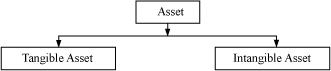
- Tangible assets that can be seen and touched; for example, machinery, building, etc.
- Intangible assets that cannot be seen and touched; for example, goodwill, patent, etc.
Rule of double entry system for real accounts:
- Debit what comes in.
- Credit what goes out.
For example:
Furniture purchased for cash
| Furniture A/c | Dr. | ||
| To Cash A/c | |||
- Nominal Account: It includes all expenses, losses, incomes and gains.
Rule of double entry system for nominal accounts:
- Debit all losses and expenses.
- Credit all gains and incomes.
For example:
- Rent paid
| Rent A/c | Dr. | ||
| To Cash A/c | |||
- Commission received.
| Cash A/c | Dr. | ||
| To Commission A/c | |||