Close Menu
    Facebook X (Twitter) Instagram
    CBSE Learning
    • Home
    • NCERT Solutions
    • Class 12
      • Class 12 Physics
      • Class 12 Chemistry
      • Class 12 Maths
      • Class 12th Biology
      • Class 12 English
      • Class 12 Accountancy
      • Class 12 Economics
      • Class 12 Business Studies
      • Class 12 Political Science
      • Class 12 Sociology
      • Class 12 Psychology
    • Class 11
      • Class 11 Maths
      • Class 11 Physics
      • Class 11 Chemistry
      • Class 11 Biology
      • Class 11 Accountancy
      • Class 11 English
      • Class 11 Economics
      • Class 11 Business Studies
      • Class 11 Political Science
      • Class 11 Psychology
      • Class 11 Sociology
    • Class 10
      • Class 10 English
      • Class 10 Maths
      • Class 10 Science
      • Class 10 Social Science
    • Class 9
      • Class 9 Maths
      • Class 9 English
      • Class 9 Science
      • Class 9 Social Science
    • Class 8
      • Class 8 Maths
      • Class 8 Science
      • Class 8 English
      • Class 8 Social Science
    • Class 7
      • Class 7 Maths
      • Class 7 Science
      • Class 7 English
      • Class 7 Social Science
    • Class 6
      • Class 6 Maths
      • Class 6 Science
      • Class 6 English
      • Class 6 Social Science
    CBSE Learning
    Home » NCERT Solutions for Class 8 Social Science Social and Political Life – 3rd Chapter 3-Why Do We Need a Parliament?
    Class 8 Social Science

    NCERT Solutions for Class 8 Social Science Social and Political Life – 3rd Chapter 3-Why Do We Need a Parliament?

    AdminBy AdminUpdated:August 11, 20232 Mins Read
    Facebook Twitter Pinterest LinkedIn Tumblr Email
    Share
    Facebook Twitter LinkedIn Pinterest Email

    Exercise : Solutions of Questions on Page Number : 41


    Q1 : Why do you think our national movement supported the idea that all adults have a right to vote?
    Answer :
    Our national movement supported the idea that all adults have a right to vote because in our struggle for independence people from all walks of life participated. They came from various backgrounds and were united in their aspirations for a free, equal and independent nation where decision-making would be in the hands of the people. The only way in which this would be possible would be through elections – allowing common people a vantage point from where they can consent to and approve of a government that “they” have a right to choose.


    Q2 : In this 2004 map of Parliamentary constituencies alongside, roughly identify the constituencies in your State. What is the name of the MP from your constituency? How many MPs does your state have? Why are certain constituencies coloured green while others are coloured blue?
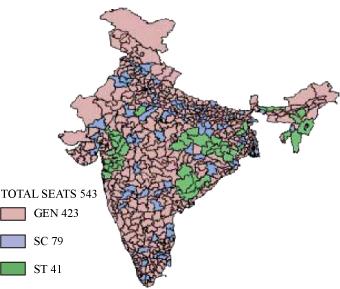
    Answer :
    Attempt this question on your own.


    Q3 : You have read in Chapter 1 that the ‘Parliamentary form of government’ that exists in India has three tiers. This includes the parliament (central government) and the various State Legislatures (state governments). Fill in the following table with information on the various representatives from your area:

    State Government Central Government
    Which political party/parties is/are currently in power?
    Who (name) is the current representative from your area?
    Which political parties currently form the opposition?
    When were elections last held?
    When will the next elections be hled?
    How many women representatives are there (from your state)?

    Answer :
    Attempt this question on your own.


    Share. Facebook Twitter Pinterest LinkedIn Tumblr Email
    Previous ArticleNCERT Solutions for Class 8 Social Science Social and Political Life – 3rd Chapter 2-Understanding Secularism
    Next Article NCERT Solutions for Class 8 Social Science Social and Political Life – 3rd Chapter 4-Understanding Laws
    Recent Posts
    • Birds Name in English
    NCERT Book Solutions
    • NCERT Solutions for Class 12 Maths
    • NCERT Solutions for Class 12 Physics
    • NCERT Solutions for Class 12 Chemistry
    • NCERT Solutions for Class 12 Accountancy
    • NCERT Solutions for Class 12 English
    • NCERT Solutions for Class 12 Economics
    • NCERT Solutions for Class 12 Business Studies
    • NCERT Solutions for Class 12 Political Science
    • NCERT Solutions for Class 12 Psychology
    • NCERT Solutions for Class 12 Sociology
    • NCERT Solutions for Class 12 Biology
    • NCERT Solution for Class 11 Physics
    • NCERT Solutions for Class 11 Chemistry
    • NCERT Solutions for Class 11 Maths
    • NCERT Solutions for Class 11 Biology
    • NCERT Solutions for Class 11 Accountancy
    • NCERT Solutions for Class 11 English
    • NCERT Solutions for Class 11 Business Studies
    • NCERT Solutions for Class 11 Economics
    • NCERT Solutions for Class 11 Political Science
    • NCERT Solutions for Class 11 Psychology
    • NCERT Solutions for Class 11 Sociology
    NCERT Solutions
    • NCERT Solutions for Class 10 Maths
    • NCERT Solutions for Class 10 Science
    • NCERT Solutions for Class 10 English
    • NCERT Solutions for Class 10 Social Science
    • NCERT Solutions for Class 9 Maths
    • NCERT Solutions for Class 9 Science
    • NCERT Solutions for Class 9 English
    • NCERT Solutions for Class 9 Social Science
    • NCERT Solutions for Class 8 Maths
    • NCERT Solutions for Class 8 Science
    • NCERT Solutions for Class 8 English
    • NCERT Solutions for Class 8 Sanskrit
    • NCERT Solutions for Class 8 Social Science
    • NCERT Solutions for Class 7 Maths
    • NCERT Solutions for Class 7 English
    • NCERT Solutions for Class 7 Social Science
    • NCERT Solutions for Class 7 Science
    Exams
    • Privacy Policy
    • NEET 2024
    • NCERT Solutions for Class 8 Sanskrit
    • Current Affairs
    Links
    Latest News
    Contact Us
    Privacy Policy
    Ask a Doubt
    © 2025 CBSE Learning

    Type above and press Enter to search. Press Esc to cancel.